Saturday, January 4, 2014

LOOKING BACK WITH GRATITUDE - 2013


As years normally go, this year flew by way too fast. Too many friends left this world.  On this Christmas Eve, I am thankful for them and many more things as well. 

I am thankful for those who take charge and give back, for old photographs and new visions, for losing weight and gaining jobs.

We lost a lot of fine Southern gentlemen in 2013.  State Senator Hugh Gillis moved on up to the golden dome of Heaven on New Years Day.  Gillis was one of the longest serving state senators in Georgia history. Two days later, my fellow historian, Milo Smith, Jr., left his earthly home to visit his beloved heavenly family. A week later, Curtis Beall, the oldest living male UGA cheerleader, a Semper Fi Marine, and an agricultural leader also died.

We lost a true friend and the epitome of compassionate judge when Judge William M. Towson died.  Judge Towson served longer than anyone as Judge of Laurens Superior Court.  The stands of Bush Perry Field will always be a little emptier after Perry Edge, a long time Irish baseball booster,  passed away. His spirit will be sitting by the Irish dugout for years to come.  

I am grateful for the patriotic dedication of Louise Purvis, one of the last Gold Star mothers, who rarely missed a Memorial Day or Veterans Day service at the VA Hospital following the death of her son Jimmy Bedgood in Vietnam.  And here's a toast to the late Patricia Belcher, who in her last years became the "Crazy Old Lady" in the commercials for Pitts Toyota.    Mrs. Belcher was anything but that, she was one of the most caring and kind women I have ever known. 

I am grateful for the simply fantastic photography of the late Irene Claxton, whose lifetime of magnificent images will soon be available for the world to see and enjoy. 

Then there was my hard working friend, Buddy Williams. Buddy worked for thousands of hours every year and counted at least that many friends.  That's why they called him "Buddy."

The man who taught us, "It's Nice To Be Nice" has moved on.  Duggan Weaver's endless stories and works of community spirit are gone, but the memories of his smile and public deeds of charity will never leave our minds.

And here's to the late realtor Robert Hill, who accompanied me to my first World Series game in 1991.  The Braves won on the last play of the game.  It would be the only time I would see the Braves win a World Series game in person. 

And, for the craftsmanship of the late Deonard Sanders, whose artistic carpentry schools are rapidly disappearing.  

We lost another Vietnam vet in 2013.  "Tee" Holmes, whose impish grin endeared him to a league of friends in his nearly 70 years, left us all too soon.  Without "Tee," our world will always be a little bit sadder. 
This past year was sadder for those of our friends and family have left this Earth.  But, it was  much richer you see for the gifts they gave to you and me.

And, I am grateful for the life of Montrose's Jeralean Kurtz Talley, who turned 114 years old this year. She hasn't left this world yet.  Mrs. Talley is the oldest person in the world outside of Japan.  

I am thankful when I hear a Jim Croce song on the radio. If you ask  yourself who is Jim Croce, then you are part of a generation who missed the greatest music of all time.
.
A big hand goes to the wheel chair ramp guys of the Dublin Civitan Club, who give up their evenings to build ramps for those who can't leave or enter their own home without help.  
I salute my good friend Pete Tyre, who serendipitously found himself as a medic in Vietnam, quietly and compassionately saving many lives along the way.   

I am grateful for the opportunity to commemorate with 15,000 others General George Pickett's failed grand and glorious charge at Gettysburg, 150 years later to the moment on the same ground.  For the opportunity to watch the play, "The Lost Colony" on Roanoke Island on the same exact spot where the first American colonists came in 1587 and to walk on the exact spot where Orville and Wilbur Wright led humanity into powered flight.

I am grateful for those who give with no expectation of any reward, those who serve with no hope of recognition and those who have the ability and desire to help others and do so.

I am grateful for the smell of daffodils on a early spring morning, the smell of fresh rain drops on a hot July evening, the aroma of fat lightered smoke floating the brown autumn countryside and the smell of evergreen in the early winter.  

For old memories remembered and new thrilling experiences, I am grateful.

For educators, who strap on their bent, but not broken, hearts every day or for as many days as the politicians will allow them to teach.  I will be grateful for the politicians when they finally learn that education is the most important thing in our country.  Speaking of education, I am grateful for the new Career Academies.  Finally someone in Atlanta realizes that technical education is critical in our ever increasingly technological world.  

For those who hold on to hope, keep their faith and try to love one another right now. For heroes, those who give all of themselves to others just when they need it most. For those who are simply grateful for what they have, I am grateful. 

To my readers in print and to the third of a million times people who have read my articles online  in the last five years, I say a great big thank you.  My greatest compliment is from those who cut out my articles and keep them to share with others or read over again.  My greatest joy is when I can make some one laugh or think back and smile and yes, even cry with the words I have been blessed to write. 

And, on this Christmas Eve, may I repeat the sounding joy that  I am grateful for the wonders of His love.  May your Christmases be merry and bright and the days of your lives be filled with goodness and everlasting light. 

And to my wife and best friend Kathy, my kids, Vicki, Scotty and Mandy, and our dogs, Bertie, Charlie, Sugar, Winston, Maggie and Emma, our cats Kit Kat and Tiger, and all of my friends, my life is much more wonderful with you in it. 

THE SORROW OF THE INNOCENTS

Remembering the Day Innocence Died In America


It was just after two o’clock  on a cool, cloudy, Friday afternoon when we heard the news.

“President John F. Kennedy has been shot and he is dead.”

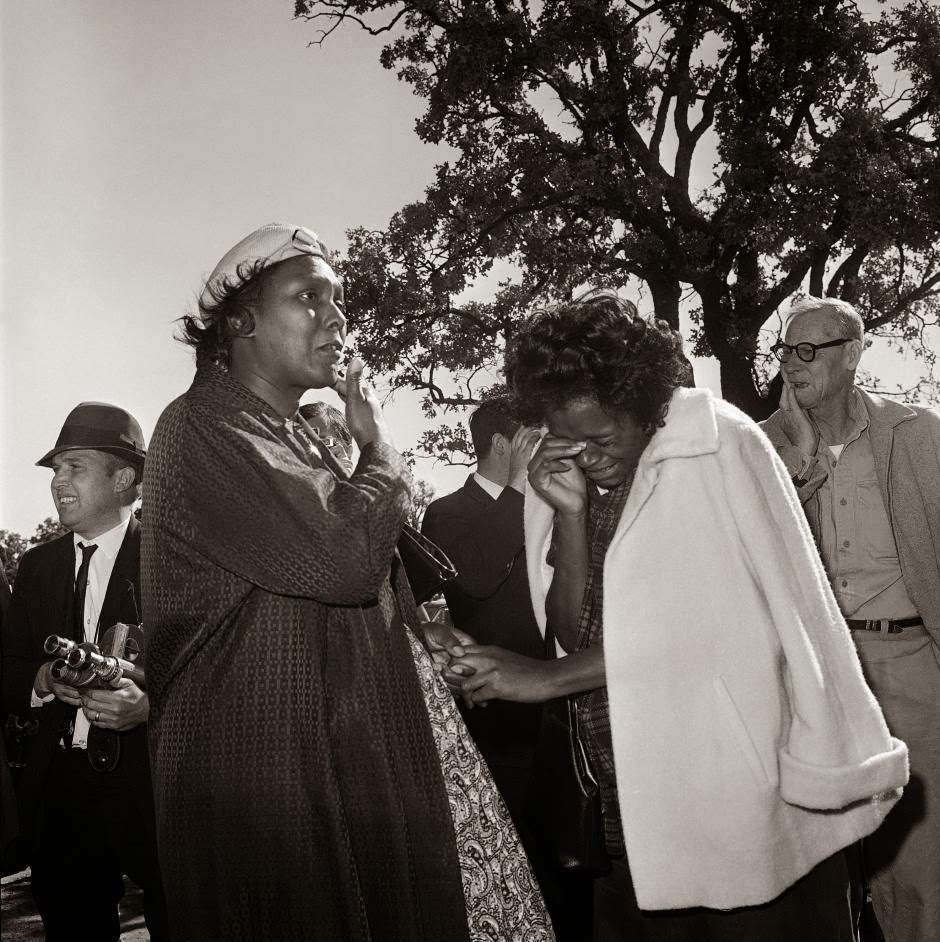
For a generation of young Americans, the killing of President John F. Kennedy just two blocks north of U.S. Highway 80 in Dallas changed our lives forever.  Adults, teachers, parents and even battle hardened veterans, were crying.  The innocent children could not understand why.   Sadly, there were those who were taught to hate who cheered and  reveled as the sorrowful sobbed all around them.

The events of the “Four Dark Days” unfolded on televisions across the county and around the country as families and friends gathered around their black and white sets to see what was going to happen next.  As it happened, history happened right before everyone’s eyes.   

Nearly everyone alive over the age of 55 remembers where they were when they heard the news. What you are about to read are the memories of a sampling of local school students, now in their late 50s and 60s.  Many remember that Friday autumn afternoon fifty years ago,  as if it were yesterday.   You can read the numbness in their words, the pain in their tears, and the sorrow in their souls - the sorrow of the innocents. 


STUDENTS MAY I HAVE YOUR ATTENTION


Three gun shots rang out in Dealey Plaza at 1:30 EST.  Within minutes, the news of the shooting spread rapidly across the nation.  School principals across the county received the word that the President had been shot.  Thirty minutes later the news came that the President had died.  It then became their task to notify the students of the tragedy.  

Angie Bedingfield Alford was playing on the playground of Cadwell Elementary School when her teachers,  Paulina Shaluta and Mrs. Grace Bedingfield,  came outside to tell us: “It felt very surreal. My mother was devastated. We stayed glued to our black and white TV in the days that followed,” Alford recalled.

At Moore Street School, Principal Sally Horne spoke over the intercom telling the students the news. Vicki Adams Blizzard distinctly remembers, “It was after 2:00 when our principal, came over the intercom and announced the news about President Kennedy. It was  a cloudy November day right before Thanksgiving break. School let out early. I remember going home and watching television, stunned and saddened.”  

Renee Fraser put her head on her desk and cried.  After school was let out early, she kept on crying.  Like nearly everyone in the country, Renee and her family were glued to their television sets for the next four days. 

Cheryl Belcher still remembers when the announcement came over the speakers, “Everyone gasped and stood still. It was quiet in the hall full of kids. I think we were all shocked and afraid of what it might mean for our country. It made me realize how fast things can change. It also made me realize our country is vulnerable, even with all the protection our country has.” 


THE DAY THE TEACHERS CRIED


For many school students, the assassination left an indelible mark on their memories.  For many students, it was the first time that they had ever seen their teachers and principals crying, even the tough football coaches had tears in their eyes.

John Pike was in Coach Sapp's Health/PE class. The principal called all the teachers to the office. When Coach Sapp came back, he was crying. Edward Tanner remembered, “Coach Sapp told us what had happened and then he had to ask the few who were cheering to stop.”

Peggy Hood Pridgen, a 6th grader at Saxon Heights, remembered that suddenly all of the teachers gathered in hall, crying, whispering. “Finally Mrs. Garner announced, "President Kennedy has been assassinated. A brief moment of silence, Peggy remembered, “Then we clapped because we had no idea what that big word meant! We quickly learned from her face that wasn't the appropriate response.” 

Dublin Mayor Phil Best was in the 2nd grade in McRae, remembered his teacher crying as she rolled in a television so her students could watch history happening in front of their eyes.

Nan Barfoot’s most vivid memory of that day was the moment when her health teacher Evelyn Tanzine went out into the hall after a knock on the door.  “She came back, she was crying. She could hardly get the words out. ‘President Kennedy has been shot and he died.’ Holy cow! We all sat in stunned silence, you could've heard a pin drop,” Barfoot harked back to that day.  

Becky Stewart Meeks recalled, “I was in the 5th grade at East Laurens. Our principal broadcast the radio announcement over the intercom system. I remember a teacher from another classroom went running down the hall screaming.”

There was total silence in Mrs. Harris’ 7th grade class.   “Mrs. Harris read the announcement as she cried.  No one knew what to say or do,” Danny Hooks recalled. 


WAS IT A DREAM? 


Rosemary Reinhardt Digby, a senior in high school at Dudley High School, recalled “I was walking back from lunch when one of my classmates told me the president had been shot. My first reaction was "what is the joke?" No joke. We went in the school library. I can still see Walter Cronkite's face when he announced the president was dead. I don't think any of us realized the impact of the death of a president. My Mother told me how she remembered the day Roosevelt died and how devastated everyone was. The same feeling we all had during that time.”

Elouise Franks  was ironing her husband’s clothes. “I had to stop for a while it was so unreal for this to happen - a real nightmare to me, she remembered.

Darlene Calvert Farrell remembers the still which  fell over everyone as if they had lost their best friend.

Candace Spicer Christian and her sister Heather were planning on going with their parents George and Barbara Spicer to celebrate their anniversary.  “I remember sitting in our den watching CBS. We did not go out to eat that night and I could not understand why. I remember my dad saying it was too sad a night for us to be celebrating,” Candace reflected.


YOU HAVE TO BE CAREFULLY TAUGHT


Oscar Hammerstein, II in the opening verse of his song, You Have To Be Carefully Taught in the musical South Pacific wrote, “You have got to be taught to hate and to fear.”  Sadly the assassination of President Kennedy brought out the worst in those children who have been taught to hate others they disagreed with.   Although widely popular across the country, President Kennedy was hated by some Southerners. 

Tom Patterson was taking his post as a Hillcrest Elementary Safety Patrol guard. When the bell rang, kids streamed out of school. “The first to approach my beat was my younger brother Hunter, who said ‘President Kennedy got shot in Dallas. A fellow safety patrol kid reveled in the news because of the President’s compassion for the plight of African Americans. Hunter & I were both so shocked we didn't know what to say,” Patterson remembered.  Meanwhile, Tom and Hunter’s sister Calli walked home down the street to see her mother Alice sitting on the ottoman with her face in her hands, sobbing. “I was barely six and trying to understand why my mother was so sad about a man she didn't know dying. I knew something was terribly wrong,” Calli remembered. Pam Holmes heard a similar remark a Johnson Street School.  

Gail S Rogers, a 7th grader then, remembered when the news came over the intercom that the President had been shot. “In the midst of overwhelming sadness, one boy jumped up and yelled, ‘I’m glad someone shot him,” Gail recalled.   Stunned and sad, Gail loved the Kennedys and even named her first baby doll Caroline. 

Some of the kids in Marcus Clements’ American History class at Adrian High School clapped as well.  Mary A. Lewis was walking to the Band Room in preparation for a music festival that evening when she heard a young boy yell, “The South Will Rise Again.”


LORD HAVE MERCY!


For African-Americans, the death of John F. Kennedy was a double blow.  For the first time in American history, an American President was beginning to establish policies to create equal rights for African Americans.  

Phyllis E. Turner was watching TV while her mother, Mrs. Equilla Speight Edwards,  was outside hanging clothes on the line.  The program was interrupted when Walter Cronkite who made the announcement.  As if it was yesterday, Phyllis recalled, “When I heard the news, I ran out to the porch and yelled to my mother, "Mama! President Kennedy's dead! My mother dropped everything, ran inside the house, sat down on the bed and said sadly, "Lord, have mercy!"

Sharmen May Gowens was in her 4th Grade class  at Susie Dasher School. “Mrs. Cruise came back into the classroom and told us "Class, I have some bad news. President Kennedy has just been shot. I screamed out, ‘Shot?! Oh, NO!’ I started crying and so did the rest of the class. It was a sad, sad day,” said Gowens, who was so moved by the death of the president that she composed this memorial poem a few months later. 


Mr. Kennedy, I remember
That day in late November
I was told you were killed,
I knew it couldn't be "for real.”
I cried, cried and cried,
But on that day you died.
That day was very sad
For two children lost their dad.
November twenty-second, nineteen sixty-three
Was when this country was sad, sad as could be.
You strove for the truth and right
With all your heart and all your might.
I will always remember you
As a man who was true
May God ever bless
This country to be a success.
While you lived, you did your part
You will always live in my heart.
May you forever rest in peace
For my love will never cease. 

                             Sharmen May Gowens


HITTING CLOSE TO HOME


Some Laurens County residents were close to the scene at the time of the shooting.

Becky Wood  was living in Garland, a suburb of Dallas.  She turned down a chance to go to see the President and went to school that day.  “When the announcement came over the intercom, the room was completely quiet until the sobs began by teachers and students alike.  Even the slumber party we had planned was a solemn occasion. Somehow, it felt we lost more than a president that day,” Becky recalled. 

Rudy Collins  was in the 3rd grade in Dallas.  Her father, who worked at the Dallas Times Herald, came to pick her up.  He was crying. Rudy saved all the pictures in the magazine and papers. She still has them.  


THE END OF INNOCENCE


There are some historians who divide the 20th Century into two parts, the time before the assassination and the time after that fateful day.  To many, the assassination represented the end of innocence of what was good and right in America. 

“ I think this event was the beginning of the end of innocence for my generation,” Kim Butler maintained.

Kay Middlebrooks Baeumel left school and jumped off the back porch as most Moore Street students always did.  She cried all the way to her home two blocks away. “ I can still remember it like it was yesterday,” Baeumel said.

Lorene Flanders was her 1st grade class at East Laurens when the announcement of the president's death came over the intercom. Her teacher, Miss Orlene Gilbert, began to cry.

“After a moment I went to her and told her that no one would shoot the president. I knew that the president's brother had something to do with the government, and I told Miss Gilbert that it must have meant that the president's brother had been shot. It was inconceivable that someone would shoot the president,” recalled Flanders, who kept telling her fellow students returning from recess that no one would shoot the president.”

Mary A. Lewis was preparing for a band festival that evening on the old football field. She remembered, “I was afraid of what would happen next. They told us the band festival would go on that night because the out of town bands had already left for Dublin. That night, the combined bands from Dublin (high school, and Junior High) and from the visiting town (can’t remember which one) played the national anthem. I cried.”

But the killing wasn’t over.  Mary and her family returned from Mass just in time to turn on the television to see the first live telecast of a murder, Jack Ruby’s shooting of the prime suspect, Lee Harvey Oswald. 

“I held my baby brother in my lap for the funeral. I told him someday I would tell him that he saw it all. I watched, as young John Kennedy broke the nation’s heart with a salute. Then life went on,  but it never was the same again.” Mary lamented.


Thursday, September 19, 2013

I WILL ALWAYS LOVE A WOMAN NAMED EBBIE


          I cannot tell you exactly when I first fell in love with a woman, maybe some fifty years ago.  I do not count the women of my family nor  the two pretty blonde-haired girls who lived on either end of the street on which I grew up on.  She was of regular height, had a beautiful, gold-tooth, sparkling  smile and a light bronze, freckled complexion.  My sister Janet, my brother Henry  and I couldn’t pronounce her real name, Evie.  We called her “Ebbie.” And, some fifty years later on the 101st anniversary of her birth, I think of the days of my youth, when most things in America were still good. And, I think about the woman I first loved and one I always will love, a woman named “Ebbie.”

Evie “Ebbie” White was born on a farm in southwestern Laurens County on July 31, 1912.   Her grandparents, Stephen and Violet White and Guyton and Caroline Fullwood were all adult or teenage slaves at the end of the Civil War.  Ebbie’s momma and daddy,   Loyd and Rosa Fullwood White, had a hard life, working in the fields for more hours a week than any should - working all the time,  just to keep themselves and their family fed and as comfortable as they could.

Ebbie too worked in the fields picking cotton and other crops.  She had very little education compared to us. Her lack of advanced schooling did not mean that she was ignorant, far from it.  As she matured, Ebbie took on all sorts of jobs cleaning houses, offices and even Claxton Hospital for a good while.    I do not mention Ebbie’s married name.  She had not too much use for the scoundrel she regrettably married early in life. 

We first came to know Ebbie on Saturday nights.  Our  parents, Jane and Dale Thompson, while they were in the prime of life, loved to go to dances and play bridge games.  So, when it was time for them to go out on the town, Ebbie became one of our first baby sitters.  Her sister, Laner White Manning, had been our maid and baby sitter as well.  

It was these two sisters, Ebbie and Laner, along with our other maids from time to time, Elaine Thomas and Ethel Wells, who first introduced me to the inner beauty of the African-American maids of the mid 20th Century South.  I still remember the day I cried and Ethel cried when she was not able to work for us anymore.  There was a whole lot of squalling going on that sad afternoon when Momma took her home for the last time.  I can still show you the spot where the Ethel’s old ramshackle house on Highway 319 was once located.  And Elaine, well there was a character is there ever was one.  Elaine carried the spirit of the Lord with her everywhere she went.  She would get upset at some of our antics , but soon the joy of Jesus took over and you could see the gold teeth shining and the spiritual music exuding out of her soul. 

The mid 1960s were a time of trials and tribulations in our nation and our community.  As pre-teenagers, we were somewhat immune from the strife here in Dublin.  We used to hear Ebbie tell tales of the days when Sheriff Carlus Gay would come to the black neighborhoods and “all the colored people” would run and hide.  

When we moved from Stonewall to Brookwood, our nights with Ebbie became even more wonderful.  Our parents didn’t have enough money to furnish our living room.  With its large expanse and green carpet, the new empty room served well as a tackle football field and wrestling arena.

Although we were banned by our mother from wrestling and throwing a football  in the living room, Ebbie tolerated our foolishness until we got too wild or interfered with her hearing her television shows.  Her favorite, Gunsmoke, would bring her to her feet, squealing and cheering Matt Dillon as he pommeled the bad guys.

Without a doubt the best times came when the all too unreal wrestling matches came on our black and white television.  All of us eventually figured out they were fake, but you could never convince Ebbie that the fighting wasn’t real.  

New Year’s Eves were the best.  That’s when we learned about all the things you are supposed and not supposed to do on New Year’s Day. 

“I learned a lot of superstitions from her; ‘Don’t wash your bed sheets between Christmas and New Year’s, don’t gather broom straw in the New Year - wait for frost, then collect it prior to New Year’s day,” my sister Janet recalled.

Ebbie would say, “Anything you do on New Year’s Day, you will be doing all year long,” so right after midnight I would go find some left over Christmas candy and gobble it down.  I later figured out that she really meant household chores.

Gardening was a special talent in which Ebbie excelled in.  To keep the snakes away, she would  go to Black’s Seed Store and pick up a big paper sack filled with sulphur.  And, to make doubly sure, she would line the perimeter of her house and soak any possible entrances with the smelly yellow powder.  Ebbie was a master grower of roses.  Her secret - tea grinds - placed around the base of a rose bush produced bushes more than seven feet tall.  I know, I saw them and couldn’t reach the tops.  She also figured out that to keep a house plant container from flowing over, place ice cubes in them  which would slowly melt into the soil.

No one, with the possible exception of our  mother and few other people in our lives, could  bake a pound cake more delicious than Ebbie.  On every occasion and just because she loved us, she would bake us a fresh, warm and oh so delightful pound cake.

For most of her later years, Ebbie got to live in a new, or virtually new, house.  It was one of the greatest times in her life when she moved into a Housing Authority apartment for seniors on Druid Street.  We all helped furnish her home with some of our furniture from our old home.  Later we bought her  a color television. 

Ebbie continued to work for me in my office until the late 1980s.  Most days I would take her home to save the cab fare.  Lots of times, I got a whole or a half of a pound cake out of the gesture, although that’s not why I did it.    Ebbie didn’t eat “hog meat” and she didn’t like the government cheese she got once a month.  So, I would buy her a month’s supply of peach snuff at Piggly Wiggly and swap it for those foot long, delicious blocks of cheddar cheese. You couldn’t get them in any store. 

I count as one of our  greatest legacies from our parents  the fact that their children were never taught to hate black people just because of their color.   Many white people of our  parent’s and grandparent’s generations did not allow black people to eat at the table with themselves and their families.  My sister, my brother and I weren’t raised that way.  Ebbie ate with us just like she was a member of our family.  We knew in our hearts that she was family as if she was one of a score of great aunts we cherished.  She was always there, at graduations, birthdays, anniversaries, births and weddings.  

"She was more like a grandparent than a baby-sitter.  I loved to see her smile, it would light up the room.  She was as proud of us as our own parents were.  We were her's and she was ours," my brother Henry recalled.  

There were many “Ebbies” Laners, Elaines and Ethels in our community and around the South.  They worked hard with very little pay. And, they were the last of  a generation. Surely, many of these treasured women were never given the recognition and the rights they should have been afforded.  But, in my mind, they were put on this Earth in some way to help bridge the gaps of racism and violence and to bring us forward as a nation.    


L-R - Back Row, Scott Thompson, Henry Thompson
Front Row - Evie White, Janet T. Greer, Rosetta Horne

Many of you who grew up before the 1980s knew and loved ladies like Ebbie who had a profound influence on our lives.  Make no mistake, the lives of these ladies were not easy and most often not fair.  They truly loved us and we, well, we truly loved them.  Sadly, the days of ladies like Ebbie White are nearly gone forever.  

But they don’t have to be.  For you see, the greatest gift Ebbie  ever gave to us was an undying, unwavering, color blind love for us and we for her.  We obviously knew what color she was. But when we saw her there was no color of her skin.  All we saw was a smiling, laughing, and caring soul. 

Ebbie left the Earth on October 17, 1995.  Both of our grandmothers died that following winter.  It was indeed a sad time for all of us.  Three women who had meant so much to each of us were no longer there for us to visit and recall the good times we used to have.  I loved them all, but as long as I breathe I will remember the first woman I ever loved, a woman named Ebbie.

Sunday, January 27, 2013


MORE THAN JUST A FOOTBALL GAME


     For the last 517 Tuesdays I have chronicled the events of the past which have shaped our lives and guided us through the uncertainty of the future.  Today, just for once, I ask leave to explain what the game of football means to the community of Dublin and what some of our senior players have meant to me personally.  Football is more than a game.  It is molded around many of the basic essentials of a successful life. Among these are teamwork, finishing a job, achieving a goal, perseverance, honor, dedication, contributing, problem solving and admittedly, having a great time.  A friend of mine, Pete Tyre, was a member of two of Dublin's state championship teams.  He was at every practice and every game but never played a down.  When asked about the impact that football had on his life, Pete said that "football and Boy Scouts got me through the horrors of Vietnam." 

     This Saturday afternoon, in the first day time and the first Saturday game in Shamrock Bowl history, some of Dublin's finest young men will strap on the "green and the gold"for the last time  in the first state championship game ever to be played in Dublin.  The first three state championship games, all victories, were played on neutral sites.  The last three, all losses, were played on the opponent's field.  There is a saying that  everything bad or good happens in threes.  So we've lost three in a row.  Now is the time to begin another trio of state championships.

     My connection to this year's team comes through my son Scotty.  Through baseball, Boy Scouts and the band I have come to know, and yes admire, many of the seniors of this year's team.  Over the last ten years, I have watched these young boys mature into young men.  They are a part of me.  They will always be a part of me.

     I first met Chris Williams on the ball field at Little Hilburn Park.  He was a little
chubby and not very fast on his feet.  But immediately Chris showed one of his most endearing and enduring qualities.  It seemed like he always had a smile permanently cemented on his round face.  Well mannered and always well behaved, Chris was and still is a compliment to his parents Luther and Valencia Williams, who were there at every ball game and every Cub Scout outing.    Chris got stronger and faster and could knock a baseball as hard as anyone.  Chris is one of those kids you might not think of as being a member of the band. He played saxophone in the band until he settled solely on football as his number one extra curricular activity. This once teddy bear like kid will now knock your head off if you aren't wearing a green and gold uniform. 

     I also met Tyler Josey on the ball field.  At the age of eight, Tyler, with his "Boog
Powell" physique and a buzz cut  towered over the rest of the kids in the league. I think I actually ordered him an XL jersey.    Tyler played first base and could catch nearly every ball thrown his way.  He never managed to get under the ball to lift it out of the park. But, I'll guarantee you if there was no fence and no Big Hilburn park next door, his line drives would have rolled into C.W. Anderson's side yard on Hodges Street.  I'll never forget the sight of Tyler rambling around the bases, his freckled face smiling and his parents cheering him on.   When I saw him four years later in the halls of Dublin Middle School, Tyler was as tall as I am.  I knew right there and then that this kid was going to be a very good football player some day.

     There is a  trio of seniors who never seem to draw the attention of the sportswriters.  I never coached only one of these young men, but my teams did play against two of them on many occasions.  Thomas Cox was always as fast as greased lightning. As a pitcher, Thomas had one of the best and most wicked breaking balls you've ever seen in a young kid.  On the soccer field, where his true talents shine, Thomas is always one of the first to get down the field, with or without the ball.  Just watch him on the kick off teams, he is usually the first one down and always manages to perform his assignment.  He's also a pretty fair defensive back in his own right and somehow despite the rigors of football and soccer, he manages to be one of the top students in his class.  

     Then there's Josh Tarpley.  "J.T.," the consummate team player, has persevered and this year took over the job of being the team's short snapper. Considering the fact that in the Dome the Irish set the state all time season scoring record, "J.T." just may have snapped more extra points in a season than anyone in Georgia high school history.   Izell Stephens and Miles Allen are also team players.  These kind young men with kind hearts l unselfishly play wherever it is necessary to help their team win. 

     The team's quarterback, Ben Cochran, carries the dogged intelligent athleticism
of his mother and the courage and leadership of his father.  As an 8th grader, Ben
pitched a near-perfect game and was snaring nearly every ground ball in the second game of a doubleheader to lead his team to the Middle Georgia Middle School Championship.  At last year's graduation ceremony, I observed Ben, dapperly dressed in a tux as a part of his duties as a marshal, take the arm of a special ed graduate who lost her way back to her seat.  Ben escorted the young lady back to her seat as if she was the queen of homecoming.  I have never been more proud of Ben than I was that night.

     No one and I mean no one, plays with more determination than Jesse Coxwell.  I have seen Jesse time and time again, dive, push, throw, stretch, play while hurting and hustle with the best of them.  Hampered by a nagging injury this season, Jesse is a smart sentinel in the defensive backfield.  Making less mistakes than his father has hairs on the top of his head, Jessie is more than aptly ready at a moment's notice to take over the duties of quarterback if necessary.

     If you don't believe in angels in the outfield, then you don't know Drew Griggs. 
At the point of death two springs ago and buttressed with an army of empathetic supporters, Drew battled back to excel both on the diamond and on the gridiron.  Check him out as the long snapper.  After he snaps the ball, he is almost always the first Irish defender to reach and tackle or hinder the receiver.   Drew has stepped up and taken his place in the long line of place kickers in Dublin football history. Will Griffith is a combination of Larry Csonka and Dick Butkus.  It's too bad that the good Lord didn't see fit to bless him with an enormous frame to accommodate his bullish style of play.  Pound for pound, no one runs harder and hits harder than "Willie G."  

     Brian Wilcher, another former sax player in the band, might be considered the best athlete on the team.  I once watched him lead a seven-man baseball team into a close contest with the best nine-man team in the league.  Had he stayed with baseball, he would have certainly been a star in that sport as well.  If you do the math and Coach Holmes let Brian carry the ball twenty five to thirty times a game as many team's number one tail backs do, Brian would easily be approaching 3000 rushing yards by now.     I used to watch Thomas Barnes as he would come into elementary school.  There was something about his demeanor that stood out from many of the other kids.  Now sporting a goatee and the bronze face of a Roman warrior, this quiet man came almost out of nowhere three years ago to become one the most important driving forces in this team's successes on both defense and offense in the last three seasons.  His leadership and aggressive style of play was a leading factor in the Irish basketball team's state championship this past spring. 

     I think I met Michael Hall one time.  I hope to meet him on more occasions.  This young man, with blazing speed, brute strength and a brilliant mind, spends many moments of his precious spare time after practice to tutor those kids who can't seem to keep up with the arduous standards of school work.  Michael has helped to organize a S.W.A.T. team and enlisted other seniors to help others in their studies.  I really don't know Tony Smith, though I hear Billy Beacham calling his name over the loudspeaker a lot.  I do know he loves to come by the concession stand after the game and ask for a piece of left over pizza.  Tony, if we have any pizza left Saturday night, you can have a whole one. 

     I don't know Brandon Edmond or Jamon Morris.  I do know it's difficult to tell them apart as their single digit numbered uniforms are hard to differentiate as the fly down the field.  I would like to get to know Brandon Taylor and Tim Wells.  I hear great things about them as  players and  persons as well.   As for Nick Davis, Sammie Daniel, Grant Hingst, Derelle Lewis and Kenyardo O'Neal, I wish I knew you better as well. I do admire your dedication to the team. 
                                                            
     The boys in the band are pumped too.  It's their last football game as well.  Scotty will eat his turkey sandwich for lunch instead of supper as he has for the last three seasons.  It didn't work against Cook last year and he had to eat a standard Bryan's sub before the dome loss to Buford.  He will join Paul and Heath in driving  the fight song rhythms.  Sris and Tim will sing melodies on their saxes.   Jeremy, Matt, Joey and Josh will be blasting their horns rooting their classmates on.  Meanwhile Kentaro, on tuba, will keep the bass line pumping.  Nelson Carswell, IV, the unofficial leader in the student section and the team's 12th man, will be painted in green and waving the Irish battle flag.  Nelson's indomitable spirit and unbridled enthusiasm has become a special and integral part of Dublin Irish football.

     Here's my prediction for the game this Saturday afternoon.  Dublin will play with the same intensity, determination, heart and discipline they have displayed in the past three seasons.  Many people associate luck with being Irish.  This year's incomparable team has relied on meticulous and exhausting preparation rather than an enchanted pot of gold.  Nevertheless, bring all your good luck charms.  Our angels will be there too.  They sit up in the trees in the north end zone in the bowl's best seats.  Look carefully. You may see a few of them rattling limbs and whistling after every Irish first down.    

     I do know this. When I turn off the light in the concession stand for the last time, there will be tears in my eyes and the eyes of many others.  For no matter what the final scoreboard reads, ours will be tears of joy and our Irish eyes, well as always,  they will be smiling, and you'll hear the angels singing "Go Irish!"
     

TRUE CHAMPIONS

I was right in my prediction of the outcome of last Saturday's state championship game at the Shamrock Bowl.  The Dublin Irish played with the same intensity, determination, heart and discipline they have displayed in the past three seasons. All season  long the players and the coaches kept their eyes on a single solitary goal.   They did not set out to score more points in a single season than any other team in the history of Georgia, colleges and professional included.  They did not desire to score more points in the playoffs than any other team in Georgia history.  Nor did they make it their goal to score more points and win by the largest margin in the history of high school football play in the Georgia Dome.  Their ultimate goal was to finish what they had started and win a state championship.  In the cooling darkness of a warm mid December evening they did just that.

Most people can't understand the concept which the Georgia High School Association has adopted concerning ties after the end of regulation play of championship football games.  It is a rule which has been in effect for at least forty-nine years.  It first happened in 1958 when Avondale and Thomasville were named co-champions.  It happened again in 1969, 1978, 1991 and as recently as 2004 when Hawkinsville and Clinch County, two great teams, battled to a draw at the end of the fourth quarter.  Last Saturday, it happened twice.  Roswell and Peachtree Ridge were named co-champions of Class 5A following a tie in their championship game.  Regardless of the reasoning behind the rule, a rule is a rule.  It is just as much a part of the game as having two feet in bounds or being able to interfere with a receiver on a Hail Mary pass in the end zone and give the offended team the ball back fifteen yards from the original line of scrimmage.

I first arrived at the Shamrock Bowl just after 8:00 on Saturday morning.  I had been there with my son and two of my loyal band boosters three hours the night before getting the concession stands ready for the game the next day.  As I topped the hill by the fire department, I began to notice the tailgaters were already there.  A motor home had been in the Century Club parking lot all night, parked in a strategic location on the slope outside the fence  where it's occupants and guests could shed their shoes, climb on top and get an optimal and free view of the spectacle about to unfold.     My trusted and loyal fellow band boosters had six hours to get ready for the onslaught of thirsty and hungry fans who were scheduled to come through the gate at 2:00.  Did we have enough food?  We ordered as much as we could store.  When I think about it, every restaurant in Dublin could not accommodate eight thousand people in four hours. 

I walked up the hill to see a line forming sometime around 11:00.  My friends Ronnie and Renee Green were the first to station themselves within inches of the gate.  I noticed everyone was sitting down, enjoying the moments.  Someone even brought along a bingo game to pass the time.  As we scurried about trying to meet the deadline, the aroma of steaks and burgers on the grill and the rapidly warming sunlight made things more pleasant.  It was as if the Super Bowl had come to Dublin.  By 12:30, the line continued to grow as if there was a big sale going on inside.  Everyone in the line began to stand.  By 1:45 the line was so enormous the game manager decided to open the gates fifteen minutes early.  I saw hundreds of people running or walking as fast as they could to stake out their usual seats.  It seemed like a bomb had gone off out in the parking lot.  Only the reserved seat holders knew they had a seat for sure. Within thirty minutes and with one hundred and five minutes before kickoff to go,  the home stands and the imported baseball bleachers  were crammed to near capacity.  One by one and then by the dozens people began to line up at the concession stand.    Drinks were sold so rapidly, you might have thought that the stand was in the middle of the Arizona desert.  There wasn't enough ice to cool the thousand gallons of drinks. 

But at 4:00 the highly anticipated match between Dublin and Charlton County began.  As I focused my camera toward the south end zone, I was amazed at the immense congregation on the hill.  Never before had so many people come to a football game in Dublin.  I was dumbstruck.  I couldn't believe what was unfolding before my eyes.  I was nervous. We were all nervous.  Those nerves subsided once Dublin jumped to an early 10-0 lead.  I will admit that I laid down face up on the slope next to the band.  It was the near the same place where I used to sneak under the fence forty years ago on Sunday afternoons to play football where my heroes did.  In the clear blue late autumn sky I noticed a jet airliner passing above, its occupants and crew oblivious as to what was going on thirty thousand feet below them. 

As the second quarter ended, Irish fans were smiling.  The band stepped it up and put on one of its best performances of the season.  I could have announced the show from the booth but I wanted to be on the field with my kids for one final time.  I checked back in the concession stand and we had made it through half time.   We did sell out the supply of all the peanuts we could order.  Everything was going well and then it happened.

Charlton County, the two-time defending state champions, roared back with a vengeance. The state appointed public address announcer kept on calling out positive plays as the boys from South Georgia moved the ball with relative ease.  With a touchdown within their grasp, the Irish defense formed a stone wall and kept the ball out of the end zone when Thomas Barnes intercepted a pass and kept the Irish ahead. Drew Griggs kicked the ball through the middle of the uprights in the south end zone to give the Irish a 13-0 lead.  Buried between the "B" and the "L" in that end zone was a shiny penny, found heads up lying next to the curb of the Friendly Gus Store  on Claxton Dairy Road just two days before.  I buried it there as a good luck piece early Saturday morning while no one was looking.  My son Scotty said he hoped that Drew would kick the winning field goal. Well he did. 

Dublin couldn't move the ball against the stingy Charlton defense.  Once again Charlton came back down the field. Charlton's champions would not relent and scored.  Another touchdown brought the score  to 13-13.  Dwight Dasher, the Indian quarterback, punter and place kicker lined up to put his team in the lead.  Brandon Edmond managed to get the tips of his fingers  on the ball and the conversion attempt failed.  The score was still knotted at 13-13. Maybe the lucky penny worked. 

Then the Irish stepped up like the true champions they are.  One time-consuming play after another exhausted the score board clock.  The drive stalled in the middle of the field.  Coach Roger Holmes made a decision.  It was his decision, the right decision.  He was not conceding defeat, he was playing to win.  Let every true Dublin football fan shun the doubters,  nay sayers and skeptics.  Many of them couldn't coach a team of grown men and beat the Dublin Irish.  After all, a major reason why there were some eight thousand people there Saturday afternoon was the countless days of preparation and brilliant planning that Dublin's coaching staff put in to get our team to the championship game.  

As the clock ticked down to 0:00, I knew our team had just won the state championship. Many were expecting an overtime session.  As I looked around, I saw no cheering, only wide eyes and open mouths in stunned disbelief as the announcer proclaimed both teams as state champions.  As parents, classmates and friends swarmed the field, I remained with the band.   When director Louis Foster announced the next band song was "Last Night," I made my way down to the field.  Just as I promised, I danced the twist on the field after we had won the championship.  My partners deserted me and I was forced to dance solo and endure alone the laughs on the faces of those around me.

I then walked to the center of the field trying to congratulate the kids whom I have known and grown to admire over the last ten years.  No one was smiling.  Tears were streaming down from their eyes.  Ben Cochran was sobbing uncontrollably as Johnny Payne attempted to get his thoughts on the game.  It seemed as if he had let the team down. He didn't.  I saw Tina Cochran crying.  She couldn't understand why her son was crying.  I tried to comfort her.  I hugged her.  We hadn't been that close since we slow danced to the long version of the Beatles' Let it Be some thirty eight football seasons ago on the dance floor of the un air-conditioned Shanty.  Guy Cochran was holding back his tears as well.  

I found nearly everyone I hugged was crying. I kept looking for Chris Williams, but never found him.  I only found out later that he injured himself twice during the game and was unable to play at the end of the game.  I too began to sob when I hugged Tyler Josey, whom I coached ten years before.  He smiled a little as he towered over me.  Other mothers were crying.  Some daddies were too.  But I kept on saying, "It's a win! It's a win! It's a win!"  Few remember that the first game ever played in the bowl was a 13-13 tie. 

I turned off the light in the concession stand and got in my truck to go to Ruby Tuesday's to celebrate another Irish victory with my fellow band boosters.  I took the long way around to avoid the long caravan of vehicles headed south to Folkston.  It has been a tradition for the last two years.  This time the place was crowded with a mixture of Dublin and Charlton fans.  We complimented our guests at the next table on the play of their team and their band.  They returned the compliment.  They were happy and we were happy.

On Sunday morning I drove out to the Shamrock Bowl just to see the place one more time. Forty years ago I did the same thing on the morning after the game.  I expected to see a gang of probationers stuffing trash into bags.  The bowl was empty.  The only evidence that a game had been played there fourteen hours before was the saturation of the bleachers with peanut hulls, spilled popcorn, empty nacho containers, candy wrappers and partially eaten slices of pizza. As I scanned the concrete for extra copies of over priced generic programs, I observed newspapers, magazines and other items brought in by fans to pass the pre game hours.  I picked up shakers and gold megaphones, their shouts long dissipated.  I must have picked up two dozen discarded tickets, the once highly desired piece of paper that caused people to stand in line for hours and criticize school officials, who sold all the tickets they could get their hands on.  There was an empty drink bottle under nearly every seat.  But my eagle eyes never spotted a single cent lying on the ground.  Maybe everyone kept their lucky pennies in their pockets. I do have to say that the band sections on both sides of the stadium were literally free of litter.

As an alumni, band booster president and school board member, I am extremely proud of the young men of the Dublin Irish football team.  Through the leadership and dedication of a unparalleled coaching staff, these champions finished the job. They achieved their goal. No asterisk, no "yea, but," no vent poster, and no one,  and I mean no one, can ever take it away from them.  They are champions, true champions. 

TRAVELS IN TIME


A River Cruise

I often think if I had a time machine,  the dial would be set first to the mid 1890s, location Dublin, Georgia, at the wharves along the banks of the Oconee River.  The intention of my adventure would be a ride down the Oconee and Altamaha Rivers to Darien on the Atlantic coast.  A warm winter's day, or perhaps a crisp autumn one when the crimson and gold leaves of the sweet gum and the oak would adorn my prolonged trek to the sea, would be my first choices. 

I stepped inside the strange contraption and set the dial for November 13, 1893.    All of a sudden, the cylindrical sphere began to wildly rotate.  The centrifugal force flung me against the wall.  When the spinning subsided,  the time dial indicated May 15, 1894.  It was a typical mid spring day, kind of warm, but at least it wasn't raining.  Though the number of houses and buildings were scant, I did manage to recognize the lay of the land.  Toward the east, I spotted what appeared to be the heart of the town, glowing in the rays of the setting sun.   A place to sleep and a good meal were the first order of my itinerary.  

Upon the crest of a small hill I  saw what I believed to be "Liberty Hall," the residence of Col. John M. Stubbs.  Stubbs was a well known and highly skilled attorney, but was also known as one of the men who brought river boating and the railroads to Dublin some dozen or fifteen years prior.  Col. Stubbs, as I surmised he would be, was in his study going over plans for his gardens and orchards, another of the things he was most famous for.  I introduced myself as a fellow Maconite, who was looking to chronicle a ride on a river boat down to Darien.  He smiled and said, "son, you are in luck.  There's a boat leaving before sunup in the morning.  I am supposed to be aboard, but I have a trial in Eastman in two days and the judge refuses to grant me a continuance.    Go up to the hotel across from the courthouse and Mr. Hooks will take care of you."  

All around me were new residences going up.  When I reached the bottom of the hill, I could see the main business district.  Off to my left was a new brick church for the Methodists  coming up from the sandy ground.    As the sun sank behind the trees, Jackson Street fell into near complete darkness.  I forgot, the electric light bulb hadn't come to Dublin yet.  Everyone I met was friendly, overly friendly.  It seemed as if they were having a contest to see who could be the friendliest to the new stranger in town.  

As I approached the center of town, I could make out the outline of a two-story wooden structure on what I knew to have been on the courthouse square.  Though I had seen photographs of it after it had been removed to another location, it seemed smaller than I thought it was.  Across the street was a handsome hotel building, not the typical home modified to accommodate itinerant travelers, but a substantial two-story brick structure with towers on each side of its front edifice.  I walked in and found Mr. Gabriel S.  Hooks, the innkeeper, behind the desk, just where the Colonel told me he would be.  I told the affable young gentleman that Col. Stubbs had sent me to his establishment.  Mr. Hooks replied, "yes, I know, Mr. Stubbs sent his servant the back way and your accommodations are ready for you."

At Mr. Hooks insistence, I sat down at a large table in a much brighter adjoining room.  Before I knew it, Mrs. Hooks was bringing out a large blue plate.  More like a platter, there were several meats and a half-dozen servings of vegetables heaped on it.  The charming lady brought out a tray with a large piping hot loaf of bread wrapped inside a red and white checkered cloth.  I ate what I could and just a bite or two more.

Not wanting to miss a chance on getting in on a little history research, I began to interrogate Mr. Hooks on the doings in Dublin.  He told me that there were plans to build a new courthouse, a large brick one, sometime next year.  Hooks and all of Dublin were extremely proud of the new artesian well on the courthouse square.    

We discussed river boats.  He said, "young man, Dublin's  got three boats in service now and we're going to have two fine new ones very soon."  "We've got three railroads in town and more on the way," the innkeeper added.    Hooks told me that I would be riding with members of the Forest and Stream Club.  This group of forty-five  men formed a club to hunt and fish along the shores and swamps of the Oconee, Ocmulgee and Altamaha Rivers.  

The group hired  Capt. J.W. Miller of Dublin  to supervise the construction of the Gypsy,  a river boat with forty state rooms and pilot the boat down the river from the club's headquarters in Dublin to Darien on the Georgia coast.   Each of the Gypsy's  state rooms were outfitted with all of the necessary appurtenances and accouterments for the hunter and the fisherman.   Among the club's charter members from Dublin were Col. John M. Stubbs, Blanton Nance, J.T. Wright and E.M. Whitehead.  Judge Emory Speer of Macon, Dudley Hughes of Danville and E.L. Dennard of Houston County were among the most erudite members of the club.  The group's membership extended to members as far away as Birmingham, Chicago, Kansas City and Topeka.  

The Gypsy was constructed in Savannah under the careful scrutinizing eye of Capt. Miller.    The captain hired his old friend W.T. Walton to serve as the boat's engineer.   J.W. Grantham, the Gypsy's master machinist, was the best of his kind in the state.  Norman McCall, an experienced river pilot and an African Baptist minister, took the helm.  McCall, a man of enormous proportions, once saved his cargo by swimming with fifty-pound sacks of fertilizer under his arms and carrying them to the river banks.  

The hour was late and I was desperately trying to memorize every utterance I could remember.    "You better go on to bed.  You'll need to be down at the river by four o'clock in the morning," Mr. Hooks warned me.  Despite the comfortable bed,  solemn slumber was not in order that night.  Just in case I did fall asleep, I asked for a early morning "wake up knock" on my door.

And though my room was more like a Pullman railroad compartment, I didn't mind it all.  The  brilliance of a waxing gibbous moon illuminated my room through a small, yet well placed, window overlooking the quiescent courthouse square.   I thought I saw an army of apparitions drifting across the lawn.  “Old Bill, a kind black man who came in earlier to clean up my room,  told me the place was haunted.  “Yas, sir!.  This place is got ghosts.   There’s folks buried under the north tower of this here hotel,” he said as he shook  and studdered to get out his words.   I questioned Bill if he seen any ghosts.  “I’s afraid of ghosts sir.  I once saw two of them in front of Mr. Maddox’s hardware store over yonder.  It must be old man Sam Coleman’s grand daddy.  He’s buried right under the store,” the old servant added.    I scanned the landscape and saw no ghosts that night, but I did see nine gaping holes in the ground where “Old Bill” said some important rich folks were buried. 

Beside my somewhat comfortable bed, I found the most recent issue of the "Dublin Post," edited by Lucien Quincy Stubbs, a brilliant man of many talents and a credit to his father, and my new friend, Col. J.M. Stubbs.  I tried to read the  news of the town with the additional aid of an oil burning lamp, but decided to pack it away to analyze every word  during the quiet moments of the ride down the river.

Right on schedule at four o'clock on the dot, "Big Norman" tugged the whistle of the "Gypsy" and interrupted a most  tranquil morning.   Fireman Hardy Perry stoked the boiler.   I purchased my ticket for a three quarters of a dollar and walked timidly along a wobbling plank to the safety of the floor of the river steamer.  Despite the early hour, the boat was filled with passengers, all seeking a pleasureful cruise down the river. 

Around daylight we reached Berryhill's Bluff in what we know now as Treutlen County.  That's when it happened again.  Dutiful black servants began to bring out the bounty of the land, the best that farms, forests and streams could render.  I met Capt. Isaac Hardeman and Joseph Miller, who was headed toward his home in Montgomery County.  Sam Yopp, E.J. Willingham and E.J. Dupree boarded the boat after a more than successful hunting trip.  The morning air was delightfully cool and made the breakfast one of the most satisfactory I have ever experienced.  Some of the passengers expressed a desire to have delayed their feast until the fresh game could be added to the serving table.

The day passed pleasantly, but all too quickly.  The few women on the boat congregated in the stern area as far away from the bow, where the men were comparing their marksmanship skills.  Any bird, whether perched or airborne, was marked for instant death.  All eyes scanned the banks for a the glimpse of the prize victim of the day, the villainous alligator. 

The crew dropped the Gypsy's anchor at the Devil's Elbow, a bend in the river which was hailed as the best resort for hunting and fishing anywhere on the Oconee River and situated just three miles above the confluence of the Oconee and the Ocmulgee and a mere ten crow-fly  miles from Lumber City.  The lakes there were the most beautiful I had ever seen.  My yells echoed throughout the lush forest.  The bream and trout jumped so freely and often, I thought they were going to jump into my hands.

After a fulfilling feast of the hunter's bounty, we enjoyed an convivial evening of vocal entertainment and several games of whist and euchre.    Around 11:00 o'clock, the sound of a small gong  reverberated throughout the boat.  It was time to retire to our staterooms.
  
The enticing aroma of coffee and biscuits holding real cow butter inside them brought me springing out of my bed.  While the men alighted from the boat for more hunting thrills, I remained behind and partook of another half dozen or so of the best biscuits I ever ate.  Remember, I am still unborn and calories don't count yet.    The hunters returned around nine for the real breakfast of the morning replete with fish and game.  They had to eat their meats alone, because the biscuits were gone.  I did manage to part with a few of them, dividing them among seven starving servants.  I also shared a couple of them and a day- long delightful conversation with Mrs. Mary and Miss Hennilu Hughes, the wife and daughter of Dudley M Hughes.   He doesn't know it yet, but in twenty years, Col. Hughes will become one of Georgia's leading congressmen and co-author a bill to establish vocational education in public schools of the United States.  

Some time later, Capt. Miller hoisted a forty-four star flag and ordered the anchor raised.   As pilot McCall began to guide the boat downstream, some of the hunters appeared to be missing.  But, the Gypsy kept on gliding through the smooth as silk waters.  Coming to a stop in a grove of willows, the Captain patiently waited for the exasperated malingerers to catch up in their rowboats.    Everyone laughed at the men, tired and exhausted from their trip, everyone except me.  If there hadn't been any biscuits left, I would have gone along on the hunt, just to see what the fuss was all about.  

On the 18th of May at high noon, the Gypsy reached it first milestone destination, the confluence of the Oconee and Ocmulgee Rivers, which is the beginning of the Altamaha River.   Though we had heard the boasts before, "The Forks" had boundless numbers of turkey and deer, just waiting for the hunters to come and place them on their dinner tables.  The boat headed to Bell's Ferry, one of the first ferries ever established in that part of Georgia.  William Chambers, who was about to enter his twenty fourth year as the ferryman, kindled  a fire and began to fry a fine mess of fish.  I took a small bream and a bowl full of hushpuppies over by a cool spring shaded by a virescent canopy of virgin pines.  I sat there and soaked in the aura of the ancient landmark.  By seven o'clock in the evening, we had arrived at White Bluff near the confluence of the Altamaha and the Great Ohoopee River, some one hundred miles distant from our departure point in Dublin. 

After a brief pause, the Gypsy moved down river to the Seven Sisters, a series of bluffs  crowned by large magnolia trees in full bloom.  With nothing alive to shoot, the itchy trigger fingered riflemen began firing at the fragrant blossoms, which exploded upon contact with their bullets.    The evening cruise continued until we reached Gypsy Lake.  Named by the club members in honor of their club boat, the six-mile-long lake was teeming with wild game.  Some of the men managed to capture two broods of young turkeys, but decided to release them hoping that soon they would be  hefty toms and hens.  Here we spent three days of feasting and more feasting, interspersed with hunting and merrymaking.  The camp ground was enveloped by a rim of oak, ash and elm carpeted with a blanket of snowy white sand.  

We traveled a half day until we reached London Bluff, where Col. Dudley M. Hughes, his wife and his daughter, along with Messers Dupree, Oliphant, Budd, Yopp and Shannon left our company for a rail trip back to their homes.  A trip of five more miles down the rapidly rising river found us at Doctor Town.  For the first time I observed the magnificent 800 yard long iron bridge,  one of a few of its kind over the Altamaha.  Fifteen miles from Darien, we found another one where the Florida Central trains crossed the mighty river on their route from Florida to the land where the Yankees used to live nearly year round.  Once again the Winchesters were pulled from their cases, much to the dismay of the gators along the banks.             

Captain Miller slowed the pace as the water was wide, but way too shallow to allow rapid passage.  On the 29th of May, some thirteen days after we left the docks in Dublin, the Gypsy pulled into Darien.   One of Georgia's most ancient towns, Darien was populated by some four thousand people; three-fourths of them were black, descendants of an honorable people who farmed the coastal granges for more than a quarter of a millennium.  I saw one large live oak which, I was told, shaded an entire acre of the sandy ground.  

After all the passengers debarked, Capt. Miller and his crew turned the boat around for the return trip to Dublin.   Many of the party lingered along the coast for a few more weeks of relaxation and revelry.   Captain Miller invited me to return the following October for another trip.  Hospitably acknowledging my thanks for a wonderful trip, but owing to the fact that I had other places to visit, I politely declined his offer.  T.C. Keenan, Isaac Hardeman, E.J. Willingham and I were driven through the countryside to Barington, where we boarded a Florida Central northbound train.   On the last day of the month in the mid afternoon I returned to Macon, ready for another adventure.  While there I decided I might as well  hang around for a year or so to see my great grandparents meet, fall in love and get married.  

Note: This is the first column written in a new style.  The story which you have just read is nearly all true.  Of course, I didn't really get in a time machine, but I certainly would if I could.   In future columns I hope to inform and entertain you with first person eyewitness accounts of more pieces of our past.